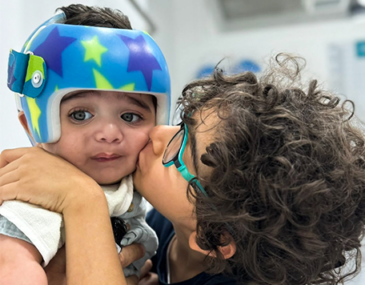
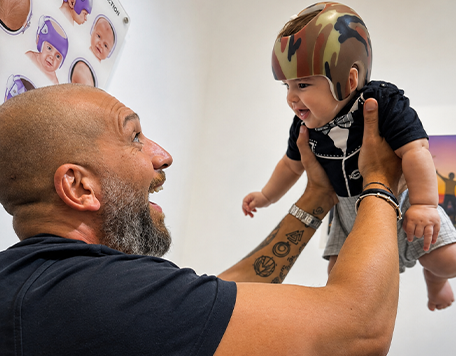
Many parents first notice it while watching their babies closely or looking at their photos. One side of the baby’s head looks a little flatter than the other, or the back of the head doesn’t seem as rounded as before. It’s easy to wonder if you’re overthinking it or if it’s something that needs attention.
The good news is that not every baby’s flat head needs treatment. However, some babies benefit from early assessment, especially while their skull is still growing quickly. Knowing when to seek advice can make all the difference to your child’s development and give you peace of mind.
Not Every Flat Spot Means Your Baby Needs a Helmet
A baby’s skull is naturally soft during the first year of life. This flexibility allows the brain to grow, but it also means the head can change shape if pressure stays on one area for long periods.
You might notice your baby’s head is flat on one side, the back of the head appears flatter than expected, or the ears and forehead no longer look perfectly aligned. These are common baby skull shape concerns, particularly in babies who prefer turning their head to one side or spend extended periods lying on their back.
In many cases, simple changes such as tummy time, repositioning during sleep, and treating neck tightness can encourage healthy skull development. But if the flattening becomes more noticeable or isn’t improving, it’s worth speaking with a baby head shape specialist rather than waiting to see if it resolves on its own.
So, Does My Baby Need a Helmet?
This is usually the first question parents ask, and the answer isn’t always straightforward.
A helmet for plagiocephaly isn’t recommended simply because a baby’s head looks a little uneven. Instead, specialists look at several factors, including your baby’s age, the severity of the flattening, facial symmetry, neck movement, and whether repositioning has already been tried.
Parents should consider an assessment if they notice:
- A persistent flat spot that isn’t improving
- One ear sitting further forward than the other
- Uneven forehead or facial appearance
- Ongoing preference for turning the head to one side
- Visible baby head asymmetry despite tummy time and repositioning
An assessment provides answers, whether your baby needs monitoring, physiotherapy, or helmet therapy.
Why Timing Matters More Than Parents Realise
One of the biggest misconceptions is that there’s plenty of time to decide.
The reality is that a baby’s skull grows most rapidly during the first year of life. This is why the best age for helmet therapy is usually between four and twelve months. During this stage, a custom helmet can gently guide natural skull growth while the bones remain flexible.
Waiting too long doesn’t mean improvement is impossible, but treatment may take longer, and the results can be less predictable. If you’re wondering when a baby needs helmet therapy, an early assessment is always more valuable than delaying until the flattening becomes more obvious.
How Hope AMC Helps Families Make the Right Decision
At Hope AMC in Dubai, the goal isn’t to recommend a helmet for every child. The priority is understanding why your baby’s head shape has changed and whether treatment is needed at all.
During the assessment, our team of multidisciplinary therapists evaluates your baby’s head shape, neck movement, growth pattern, and overall development. Some babies only need repositioning advice or physiotherapy for torticollis, while for others, a custom plagiocephaly helmet is suggested as part of their flat head baby treatment.
Every helmet is created using advanced 3D scanning technology to provide a precise fit that’s lightweight, breathable, and comfortable for everyday wear. We provide regular reviews to ensure the helmet continues to fit correctly as your baby grows, supporting safe and effective baby head shape correction throughout the treatment journey.
Trust Your Instincts and Ask the Question
If something about your baby’s head shape doesn’t feel quite right, it’s okay to ask. Most concerns turn out to be manageable, and early advice can help you avoid unnecessary worry.
Whether your baby simply needs monitoring or may benefit from helmet therapy, a professional assessment provides the clarity every parent deserves. Book a consultation with our pediatric specialists and take the next step with confidence.
Frequently Asked Questions
Yes. Mild cases often improve with tummy time, repositioning, and physiotherapy if neck tightness is present. A specialist can determine whether these approaches are enough or if helmet therapy would provide better results.
Most babies wear a cranial helmet for around four to six months. The exact duration depends on your baby’s age, head growth, and the degree of correction needed.
Custom-made helmets are designed to be lightweight, breathable, and comfortable. Most babies adjust quickly and continue with their normal feeding, sleeping, and play routines while wearing them.