

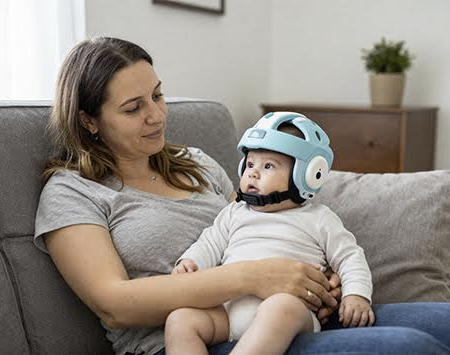
Discovering that your baby’s head shape looks different than expected can be worrying. Many parents immediately begin searching for answers, only to come across unfamiliar terms like plagiocephaly and craniosynostosis. While both conditions can affect the shape of a baby’s head, they are not the same and require very different approaches to diagnosis and treatment.
Understanding the difference is essential because early evaluation can help ensure your child receives the right care at the right time. At Hope AMC, we believe that informed parents are better equipped to make confident decisions about their child’s health. Here’s what you need to know.
Why Head Shape Changes Happen in Babies
A baby’s skull is made up of several bones connected by flexible sutures. These sutures allow the skull to move during birth and expand as the brain grows rapidly during infancy.
Sometimes, a baby’s head may develop an unusual shape. The two most common causes are plagiocephaly and craniosynostosis. Although they may look similar initially, they have different causes and require different treatment approaches.
Plagiocephaly vs Craniosynostosis: What’s the Difference?
Before exploring treatment options, it’s important to understand what each condition means.
| Plagiocephaly | Craniosynostosis |
| A common condition where prolonged pressure on one part of a baby’s soft skull causes a flat spot. | A birth condition where one or more skull sutures fuse too early, affecting normal skull growth. |
| Usually develops after birth. | Present from birth due to premature suture fusion. |
| Does not affect brain growth. | May affect skull and brain development if left untreated. |
| Often improves with repositioning, physiotherapy, or a plagiocephaly helmet (cranial orthosis). | Requires evaluation by a pediatric specialist and may need surgery. |
| Early treatment with a cranial orthosis can help guide the skull into a more symmetrical shape. | Helmet therapy alone is not an appropriate treatment for craniosynostosis. |
When Is It Likely to Be Plagiocephaly?
Parents may notice:
- Flattening on one side of the back of the head
- Mild facial asymmetry
- One ear appearing slightly further forward
- A parallelogram-shaped head when viewed from above
The reassuring news is that positional plagiocephaly is highly manageable when diagnosed early. Depending on the severity, treatment may include repositioning techniques, supervised tummy time, physiotherapy, or a custom-made plagiocephaly helmet. At Hope AMC, we use a personalised cranial orthosis that gently guides your baby’s natural skull growth while allowing normal brain development.
When Is Helmet Therapy Recommended?
Not every baby with plagiocephaly needs helmet therapy. Mild cases often improve with repositioning strategies and increased tummy time.
However, when flattening is moderate to severe or does not improve with conservative measures, a cranial orthosis may be recommended. Helmet therapy works by providing gentle guidance as the baby’s skull naturally grows, helping improve symmetry over time.
One of the most common questions parents ask is about the best age for helmet therapy. Because the skull grows most rapidly during infancy, treatment is generally most effective when started early after a specialist’s evaluation. Early intervention can lead to better outcomes and may shorten the overall treatment period. Our team emphasises that every child is different, so treatment timing should always be based on an individual clinical assessment.
Why Early Evaluation Makes a Difference
Searching online for helmet therapy nearby can provide many options, but choosing an experienced pediatric rehabilitation team is just as important as starting treatment at the right time.
Early assessment helps:
- Confirm the correct diagnosis
- Rule out underlying conditions
- Determine whether helmet therapy is appropriate
- Monitor your baby’s progress closely
- Provide personalised guidance for parents throughout treatment
Prompt evaluation also gives families reassurance and a clear treatment plan during what can often feel like an overwhelming time.
Partner with Hope AMC for Compassionate Helmet Therapy
At Hope AMC, we understand that every parent’s priority is giving their child the healthiest possible start in life. Our experienced rehabilitation team provides comprehensive assessments, personalised treatment plans, and custom-fitted plagiocephaly helmet solutions designed to support healthy skull development safely and comfortably.
Frequently Asked Questions
1. Does every baby with plagiocephaly need a helmet?
No. Many mild cases improve with repositioning, tummy time, and physiotherapy. A specialist will determine whether a plagiocephaly helmet is necessary based on your baby’s condition.
2. What is the best age for helmet therapy?
The best age for helmet therapy is during early infancy when the skull is growing rapidly. A pediatric specialist can recommend the most appropriate time after evaluating your baby’s head shape and development.
3. Can helmet therapy treat craniosynostosis?
No. Helmet therapy is used to manage positional plagiocephaly. Craniosynostosis requires specialist medical evaluation and may involve surgical treatment depending on the severity and type of suture fusion.
If your baby’s head shape has changed or you have concerns about plagiocephaly or craniosynostosis, we’re here to guide you with expert care and compassionate support every step of the way.
Contact Hope AMC today to schedule an assessment and take the first step towards the right care for your child.
