
The first few months of your baby’s life are filled with milestones, and it’s natural to notice every little change. Have you found yourself wondering why your baby’s head looks uneven or noticed a flat spot on your baby’s head? You’re not alone. Many parents worry that something is wrong, while others think that it will resolve on its own.
The good news is that many changes in head shape are common during infancy. However, some signs deserve a closer look. If you know when to wait, when to monitor, and when to seek professional advice, it can make a significant difference in your baby’s development and treatment options.
Why Does a Baby’s Head Shape Change?
A baby’s skull is soft and flexible to allow for rapid brain growth during the first year of life. Because of this, constant pressure on one area of the head can sometimes lead to flattening.
Common reasons include:
- Sleeping in the same position for long periods
- Tight neck muscles, also known as torticollis
- Premature birth
- Limited space during pregnancy, especially with twins or multiple births
These factors can contribute to a flat head in babies, an uneven baby head shape, or head asymmetry. In many cases, early changes are mild and can improve with repositioning and supervised tummy time.
When Should Parents Be Concerned?
A slightly uneven head during the first few weeks isn’t always a reason to worry. However, it’s worth having your baby assessed if you notice:
- Your baby’s head is flat on one side or at the back, and the shape isn’t improving.
- One ear appears farther forward than the other.
- Your baby’s forehead looks more prominent on one side.
- Your baby prefers turning their head in only one direction.
- The flattening becomes more noticeable as your baby grows.
These can be signs of flat head syndrome, also known as positional plagiocephaly. While the condition is often cosmetic, leaving moderate or severe cases untreated may lead to more noticeable facial asymmetry over time.
Can a Flat Head Be Corrected?
One of the most common questions parents ask is, “Can flat heads be corrected?”
In most cases, yes. The right approach depends on your baby’s age and the severity of the flattening.
Mild cases often respond well to:
- More supervised tummy time
- Changing your baby’s sleeping and resting positions
- Encouraging movement toward both sides
- Treating underlying neck tightness if present
When flattening doesn’t improve, helmet therapy as part of flat head baby treatment is highly recommended.
Does My Baby Need a Helmet?
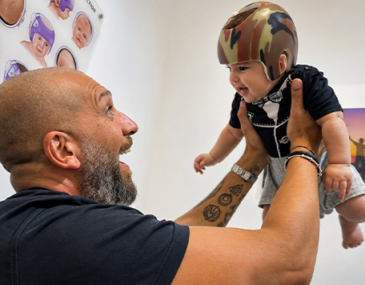
Hearing that your baby may need a helmet can feel overwhelming, but helmet treatment for plagiocephaly is safe, gentle, and designed to work with your baby’s natural skull growth.
Parents often ask, “When does a baby need helmet therapy?” It depends on your baby’s age, how their head is developing, and whether repositioning has improved the shape.
The best age for helmet therapy is generally between 4 and 12 months, when the skull is still growing rapidly. Starting treatment during this period can lead to faster and more effective correction.
How We Help Families at Hope AMC
If you are concerned with your baby’s skull shape, an early assessment can provide clarity and peace of mind. At Hope AMC, we carefully evaluate your baby’s head shape to determine whether simple repositioning is enough or whether a custom helmet would offer better results.
Our approach begins with a detailed consultation, followed by advanced 3D scanning that can accurately measure the head shape. If helmet therapy is the most suitable treatment option, we create a lightweight, custom-fitted cranial helmet designed to gently guide natural skull growth without restricting your baby’s daily activities.
We also schedule regular follow-up appointments to adjust the helmet as your baby grows, ensuring treatment remains comfortable and effective throughout the process.
For many families, having a clear diagnosis is just as valuable as the treatment itself. Instead of wondering how to fix a flat head in your baby at home, you can talk to a helmet therapy specialist for personalized guidance based on your child’s unique needs.
Don’t Wait if You’re Unsure
It’s easy to spend hours comparing photos online or hoping your baby’s head shape will improve on its own. But if you’re concerned, an evaluation by a baby head shape specialist can help you understand whether your baby’s development is progressing normally or whether early intervention would be beneficial.
The earlier concerns are assessed, the more treatment options are available and the better the potential outcomes.
Conclusion
Not every flat spot requires treatment, but every concern deserves attention. If you’ve noticed a baby’s head looks uneven, persistent flattening, or other changes in your baby’s head shape, seeking professional advice early can make all the difference.
At Hope AMC, we’re here to support families with accurate assessments, compassionate guidance, and personalized treatment plans, helping parents feel confident every step of the way.
Frequently Asked Questions
Not always. Mild flattening is common during the first few months and may improve with repositioning and tummy time. If the flattening becomes more noticeable or isn’t improving, it’s best to have your baby assessed.
Babies with head shape concerns are typically assessed by healthcare professionals experienced in infant cranial development. At Hope AMC, our pediatric specialists evaluate head shape and recommend the most appropriate treatment based on your baby’s individual needs.
Most babies wear a cranial helmet for about 4 to 6 months, although the duration depends on their age, skull growth, and the severity of the asymmetry. Regular follow-up appointments help ensure the treatment stays on track.