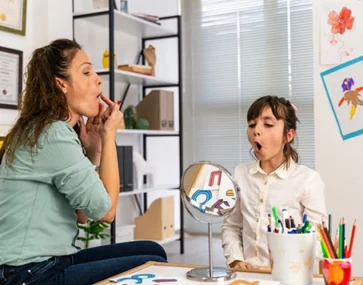
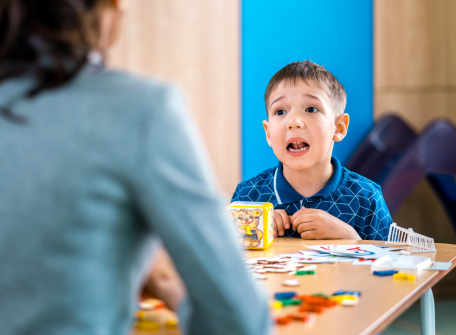
Bubble blowing is a very simple activity that can facilitate speech therapy by encouraging communication, eye contact, and oral-muscle development. It also encourages children to ask for, imitate, and respond to sounds. Many speech therapists use bubble activities to encourage children to practice early speech and language skills in a fun and engaging way.
Blowing bubbles is not just a fun activity. It can also be used as an effective tool to encourage your child’s speech and language development. Surprised? Let’s find out more!!
Kids love to blow bubbles, pop them, watch them float, and step on them repeatedly. Well, their fascination with bubbles can be utilized to hold their attention. The same also helps to engage or calm down a fussy child.
The leading charitable organization, The Hanen Centre, considers bubbles the “people toy” as kids can operate them only with assistance. So, thanks to bubbles, parents get the opportunity to interact with their children. Children, on the other hand, get a purpose or reason to communicate because bubbles are engaging.
Continue reading to learn about the different ways that you can exercise with bubbles to promote your child’s language development.
What Speech and Communication Skills Can Bubble Play Support?
Bubble play is not just about fun. It can also be used during playtime to help develop several early speech skills in children.
Some of the most essential skills that bubble play can help develop in kids include:
Communication Skills
- Teaching children to ask for “more bubbles”
- Helping kids to practice simple words like “pop,” “more,” and “again”
- Learning to take turns during play
Speech Development Skills
- Helping kids strengthen their mouth and tongue muscles
- Teaching kids how to control their breathing during speech
- Encouraging kids to make sounds such as “k,” “g,” and “ng.”
Social Interaction Skills
- Promoting better eye contact
- Improving interaction with parents, peers, and speech therapists
- Keeping kids interested in speech therapy activities
With regular play, bubbles can be a simple and fun way to help develop speech skills in kids while keeping them happy and engaged.
Five Ways to Use Bubbles for Language Development and More
Below is a comprehensive list of the top 5 scientifically proven ways to promote language development among children.
- Bubbles can be used to motivate a child to make a request. First of all, blow some bubbles in front of your child. After that, screw the lid on the tight of the bubble blower and give it to your child. Now wait for his reaction. If he hands the blower back to you for help after making some unsuccessful effort to open it, he has just made a request.
- In continuation of the above point, when a child hands the blower back to open, use the scenario to teach him the sign to open. Meanwhile, you can also teach him the sign for more, please, again, etc., while keeping him engaged in bubble-blowing.
- Many speech and occupational therapists in Dubai engage children through bubble-blowing activities and watch for their keenness to more bubbles. This simple activity promotes eye contact.
- Parents and therapists often use bubbles to teach a child words like more, pop, fun, bubbles, please, etc.
- Blowing bubbles is also considered a good exercise for the mouth as it positions and strengthens the tongue required to produce sound from the back of the mouth. Therefore, kids master the technique of producing “k,” “g,” and “ng” sounds correctly by blowing bubbles.
We hope the different ways of using bubbles to motivate a child and fuel his language development are clear to you. Kindly note that this activity’s benefits go far beyond the ones mentioned above. For example, blowing longer streams of bubbles reinforces abdominal muscles and helps control the breath for speech. Most importantly, we must use bubbles to play with kids as it is an enjoyable activity for them.
Despite indulging in bubble-blowing, some kids fail to make gestures, learn words, pronounce alphabets, etc. Seeking help from an expert speech therapist in such a scenario is recommended.
When Should Parents Consider Speaking with a Speech Therapist?
Although bubble play can help improve communication, there are times when children may need help from a speech therapist. Parents should consider speaking with a speech therapist if they recognize the following in their child:
- The child rarely looks at them during play
- Few attempts to communicate a need or want
- Trouble making sounds or simple words
- Few reactions to speech or interaction
- Late speech development compared to children of the same age
An experienced speech and language therapist in Dubai can assess your child’s unique speech challenges and provide you with strategies to help your child communicate effectively.
Hope Abilitation Medical Center is a highly trusted pediatric medical facility offering a full spectrum of child healthcare services, including occupational therapy, pediatric physiotherapy, speech and language therapy, psychomotor therapy, and more.
As a leading pediatric clinic in Dubai, we take the utmost care of our patients and make them feel special with each visit. Parents are always welcome to contact us to discuss their child’s concerns. All our occupational therapists, language therapists, doctors, and support staff are understanding and empathetic. Most importantly, the health of your child would be their first priority under any circumstances. Reach out to us to schedule an appointment.
FAQs
Bubble-blowing activity helps children to communicate, request more bubbles, and imitate echo sounds. This activity is commonly used in speech therapy sessions because it helps to strengthen the muscles of the mouth, control breathing, and motivate children to engage in speech activities.
Bubble play can be used for speech development in children from 12 months onwards, when they start to engage, point, and make sounds. Speech therapists use bubble play with toddlers to promote early communication, eye contact, and word imitation.
Bubble-blowing activity helps children develop speech skills such as breath control, strength of the mouth muscles, sound production, and early vocabulary.
Yes, bubble play can be an effective way to help late talkers, as it will encourage children to communicate in a fun environment. It is also used by speech therapists to encourage children to make gestures and speak.
Bubble activities can be used frequently in speech therapy sessions or playtime at home. It can also be used a few times a week to encourage children to communicate or speak in a natural way.