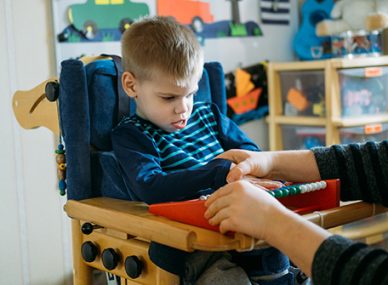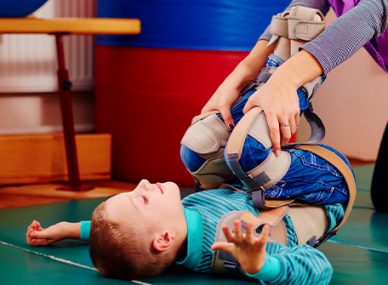
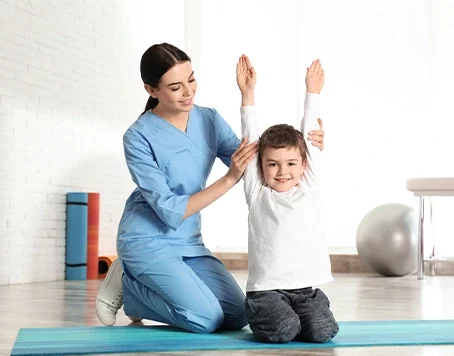
A child’s first attempts at movement tell a thousand stories. A wobble while sitting, difficulty lifting the head, or an unsteady step often leaves parents wondering if their child will one day move with confidence. For families of children with cerebral palsy, these questions carry even more weight. Mobility challenges affect everyday life, from playing to learning, and every small milestone becomes a major triumph.
Yet this journey does not need to feel uncertain. With the right physical therapy program, children can build new movement skills, strengthen motor pathways, and learn to navigate the world in ways that feel empowering and joyful.
Understanding Mobility in Cerebral Palsy: A Foundation for Progress
Cerebral palsy affects how the brain controls movement. Children may experience stiffness, limited balance, difficulty coordinating both sides of the body, or challenges walking. Families searching for proven pediatric physical therapy nearby are often looking for answers to two essential questions, like ‘can my child improve and how can therapy help?’
The answer is, mobility training focuses on improving how children transition between movements, sit, kneel, stand, climb, walk, and explore. These abilities form the foundation of independence, making mobility therapy a long-term investment in a child’s future confidence.
The Role of Physical Therapy in Strengthening Movement Skills:
Therapy for cerebral palsy is not just exercise. It is targeted, brain-based motor learning that uses repetition, challenge, and purposeful play to teach the body how to move more efficiently. Through physical therapy treatment for cerebral palsy, children work on skills that shape everyday function, such as
- Trunk stability for controlled sitting
- Joint flexibility for smoother movement
- Balance control for safer steps
- Strength building for improved endurance
- Postural alignment for better gait patterns
Each session is gradual but powerful. Movement is broken into small, achievable parts, which are then rebuilt into stronger functional skills.
Ali Ramadan, A Therapist Who Builds Abilities That Last
Ali Ramadan brings years of neuro-pediatric expertise to each child’s therapy journey. His work spans NDT, gait correction, aquatic therapy, spider cage, UGUL, suit therapy, kinesiology taping, and manual therapy. What sets him apart is his commitment to research-driven care and the WHO ICF model, which ensures children gain skills that improve their daily participation not just performance inside the therapy room.
His approach blends structure and creativity. One session may include purposeful play for core activation and another may focus on strengthening through the Universal Exercise Unit. This dynamic method ensures children are always challenged and always supported.
Why Early and Age-Specific Care Matters?
For infants showing delays or unusual movement patterns, parents often turn to physical therapy for infants to build early motor foundations. Babies learn by exploring, and therapy teaches them how to explore safely and successfully. Crawling, rolling, pulling to stand, and early stepping become guided experiences that shape long-term mobility.
As children grow, therapy evolves with them. Skills become more complex, movements become more controlled, and confidence builds with every step.
FAQs
Many children see improved standing balance and walking ability with consistent mobility training.
Progress varies but early changes in posture control and movement patterns are often visible within weeks.
Yes, therapy supports children across all levels, though the methods differ based on individual needs.
Hope AMC: Your Partner in Building Movement Confidence
Parents looking for physiotherapy for their child in Dubai choose Hope AMC because our programs are built on evidence, compassion, and personalised care. With a team trained in CME, DMI, NDT, aquatic therapy, and mobility rehabilitation, we deliver advanced pediatric physiotherapy in Dubai designed to improve functional independence. Hope AMC provides structured assessments, guidance and progress-driven therapy to help your child move with strength and confidence. Begin your child’s journey toward better mobility through and book us now to support meaningful movement every step of the way.