It was only last year and Noor still remembers the day clearly. Her three-year-old son, Adam, was sitting quietly in the living room, lining up his toy cars. When she called his name, he didn’t respond. When she asked him what he wanted for lunch, he pointed silently toward the kitchen.
At first, she thought he was simply taking his time to talk. But over the months, she noticed other signs like limited eye contact, difficulty expressing needs, and frustration during interactions.
Many parents like Noor who are in similar situations begin searching online for solutions like to mitigate speech delay with professional therapy in Dubai. What they often discover is that communication challenges can sometimes be linked to autism, and the right support can make a significant difference.
Now, this journey usually begins with three important stages: recognizing early signs, undergoing proper assessment, and implementing effective speech and language therapy. Let’s come forward to enlighten more about speech delays, especially for your autistic child.
Common 5 Early Signs That May Indicate Communication Challenges:
Every child develops at their own pace. However, certain communication patterns may suggest the need for professional guidance. Parents might notice that their child:
- Uses very few words by age two or three
- Struggles to express needs verbally
- Repeats words without meaningful communication
- Avoids eye contact during conversation
- Finds it difficult to understand simple instructions
Though these signs do not always confirm autism, but they can signal delays in communication development. Early identification allows families to explore interventions such as speech therapy in Dubai, which helps children gradually develop their expressive and receptive language skills.
Recognizing these early signals is often the first step toward helping a child communicate with confidence.
Why Professional Assessment Is an Important Step?
When parents notice persistent communication challenges, a structured assessment becomes essential. Here, a professional evaluation helps specialists understand a child’s developmental profile. During an autism assessment, clinicians may evaluate:
- Language comprehension and expression
- Social communication abilities
- Behaviour patterns and interaction skills
- Cognitive and developmental milestones
Through a comprehensive speech and autism assessment, clinicians can identify whether a child may benefit from therapies such as speech and language therapy or other developmental interventions.
At Hope AMC, our multidisciplinary professionals work together to ensure each child receives a tailored care pathway after assessment. This collaborative approach ensures that therapy targets the child’s specific communication needs.
How Speech Therapy Helps Children With Autism Communicate?
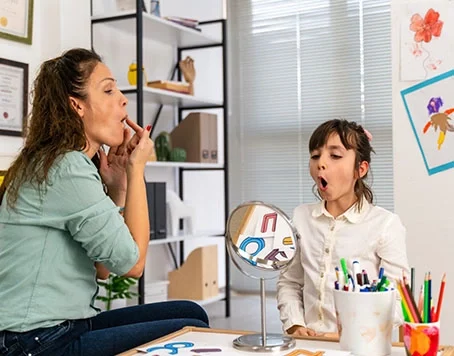
Once communication challenges are identified, the next step is a structured intervention. This is where professional speech therapy in Dubai plays a transformative role. Speech therapy focuses on improving how children understand language, express thoughts, and interact with others. For children with autism, therapy sessions are often designed around play-based and interactive learning methods.
For example, an expert speech therapist in Dubai may focus on several key areas:
1. Developing Basic Communication Skills
Children learn foundational communication strategies such as requesting items, responding to questions, and expressing emotions.
2. Improving Language Understanding
Therapists help children understand instructions, identify objects, and process spoken language more effectively.
3. Encouraging Social Interaction
Communication is not just about words. Therapy sessions often include activities that build eye contact, turn-taking, and conversational skills.
4. Reducing Frustration Through Expression
Many children experience frustration when they cannot express their needs. Therapy introduces alternative communication tools and strategies to reduce these challenges.
At Hope AMC, our therapy programs are designed to help autistic children gradually and confidently build communication skills. Our sessions are structured to encourage participation while keeping learning engaging and supportive.
Parents looking for structured speech and language therapy programs can learn more about professional speech and language therapy with us. Book an appointment with us today to help your child communicate better!
The Importance of Early and Consistent Therapy:
Early intervention can significantly influence how children develop communication skills. When therapy begins early, children often show improvements in language comprehension, social interaction, and emotional expression. Parents searching for the best speech therapist in Dubai often discover that consistent therapy combined with family involvement leads to stronger outcomes.
Families interested in understanding advanced therapeutic approaches can also explore our comprehensive guide on VitalStim and speech therapy that can help your child overcome swallowing difficulties more efficiently.
Frequently Asked Questions
If your child shows limited speech, difficulty understanding instructions, or struggles with communication by age two or three, it may be helpful to consider a professional evaluation.
Therapy focuses on improving communication skills, language comprehension, social interaction, and expressive language through structured activities and guided practice.
Look for qualified therapists who offer individualized therapy plans, structured assessments, and evidence-based communication interventions.
Yes, specialized therapy techniques can support children experiencing swallowing or feeding difficulties along with communication challenges.