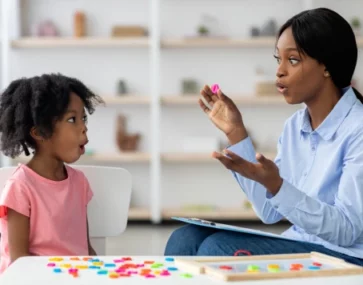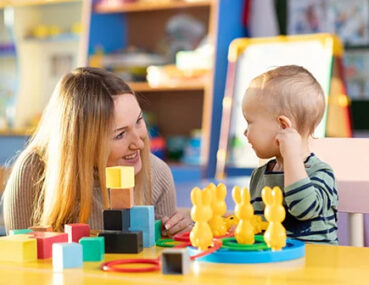
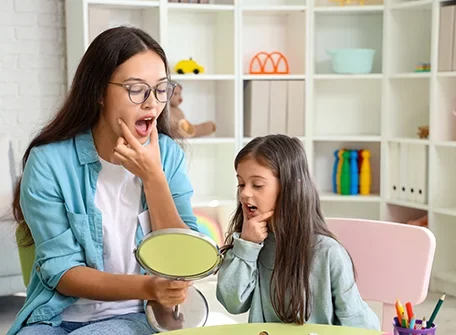
Speech therapy exercises can significantly improve communication skills in children with autism when practiced consistently. Simple, engaging activities like using essential words, sound imitation, and interactive play help build language, social interaction, and confidence. With the right guidance and early intervention, parents can effectively support their child’s speech development at home.
As a parent of a child with autism, it is never easy. But, with quick intervention and the right therapy approach, autistic kids can overcome developmental challenges and lead a more happy life.
Autistic children are often self-absorbed and they love to have a private world. They basically have very limited ability to communicate and interact with others successfully. They often have difficulty developing language skills. That’s why they fail at what others are trying to say to them. They lack the necessary skills to communicate nonverbally, such as through eye contact, hand gestures, or facial Expressions.
Intensive Speech therapy is an important part of the speech development of children with autism. This path-breaking tailored therapy is designed with fun and engaging activities so that children can try them even at home. However, parents need to collaborate with the speech therapists to understand the therapeutic exercises and their objectives.
In this blog post, we’ll explore five simple yet effective speech therapy exercises that parents can easily incorporate into the daily routine of their children.
Basic Speech & Communication Milestones Checklist for Parents
Every child develops at their own pace, but here are some general indicators:
Early Stage (1–3 years)
- Responds to sounds and voices
- Begins babbling or making sounds
- Uses gestures to communicate needs
Developing Stage (3–5 years)
- Starts using single words or short phrases
- Understands basic instructions
- Shows interest in interactive play
Progressing Stage (5+ years)
- Uses more words to express needs
- Engages in simple conversations
- Improves understanding of social cues
If your child is not meeting several of these milestones, it’s a good idea to consult a speech therapist for early support.
1. The Power of Essential Words
Teaching your child a few important words can be a game-changer. Focus on words like “more,” “help” and “stop.” These may seem simple, but they’re super important in everyday life. For example, at dinner time, when your child finishes their favorite food, you can point to their plate and say “more” while using a question gesture. With time, your kid will understand the meaning and use of the word. Similarly, you can use more words with proper gestures. It might take some time, but keep at it. Remember, you need to be patient unless your kid starts responding.
2. Animal Sounds Adventure
Kids with autism often have a special connection with animals. Parents can take advantage of that to help them with their speech. You can turn your living room into a mini-farm or zoo with toy animals. As your child picks up each animal, create the specific sound. Like “Moo” for the cow, “baa” for the sheep – you get the idea. Soon, you may hear your little one is trying to copy these sounds. This is a fun way to encourage vocalization.
3. Favorite Things First
Every kid has a ton of toys. You can use your child’s favorite toys and snacks as learning tools. Keep them in sight but out of reach. Your child will likely try to communicate their desire for these favorite items. Help them out by pointing and saying words, like “toy” or “snack.” Over time, they may start using gestures, looks, or even pronounce words to ask for what they want.
4. Sorting Fun
Many children with autism have a liking for organizing things. You can use this interest to your advantage. Well, you can create a sorting game with everyday objects or picture cards. For example, you can use fruits and veggies from your kitchen or cards with pictures of different items. Next, you need to encourage your child to group them by color, shape or use. This activity helps kids with speech and boosts thinking and problem-solving skills.
5. Cheer Them On
Kids love to be appreciated. And, children with autism are no different. When your child responds to their name, uses a new word or follows an instruction -complement them! Give them a reward they love – like maybe it’s a piece of cookie, or extra playtime with a favorite toy or a few more minutes of screen time. This positive reinforcement really encourages them to keep communicating even more.
When Should You Consult a Speech Therapist?
While every child develops at their own pace, certain signs may indicate the need for professional support. Consider consulting a speech therapist if your child:
- Shows little to no response when their name is called
- Has very limited or no speech development for their age
- Struggles to make eye contact or use gestures
- Finds it difficult to follow simple instructions
- Gets frustrated when trying to communicate
- Stops using words or skills they had previously learned
Early intervention plays a crucial role in improving communication skills. If you notice any of these signs, seeking guidance from a qualified speech therapist can make a significant difference in your child’s development.
Final Words
Remember, every child is unique and what works for one kid may not work for another. The goal is to make intensive speech therapy for children fun and engaging.
But before you try anything at home, you need to consult board-certified speech therapists for your kid. They design a tailored therapy plan that addresses the unique needs of your kid. So, the chances are these therapist-suggested specific exercises will benefit your kid the most.
Hope AMC is a prestigious clinic that offers customized speech therapy by certified and experienced therapists. Our therapists involve parents/caregivers in the therapy program and engage the child in both individual and group therapy sessions.
Visit our website to know more! Or, book a consultation today!
Frequently Asked Questions
Simple and engaging exercises like teaching essential words, imitating sounds, using favorite objects, and interactive play activities work best to improve communication skills.
Yes, speech therapy can help nonverbal children by encouraging alternative communication methods like gestures, sounds, and eventually words.
Results vary for each child, but with consistent practice and early intervention, improvements can be seen within a few months.
Yes, many exercises can be practiced at home, but they should be guided by a qualified speech therapist for the best results.
Speech therapy should begin as early as possible, ideally when delays are first noticed, to achieve the best outcomes.